One Tree Medical
Come sit under the one tree.
We care for you.
Come sit under the one tree.
We care for you.
"The first thing we ask is: What's working? What's not working?"
Our patients get 100% of our concern and attention. There is no healing without connection.
You are our father, son, daughter, aunt... Our organization is founded around how people care for each other. Each person who works here understands that we are a people organization, and we just happen to treat patients.
Meanwhile, healthy boundaries are an invitation to intimacy.
When you can trust that people will maintain their healthy boundaries, you feel safe. When people feel safe, they can share their suffering and their vulnerabilities. That makes space for talking about what's really happening. And when we talk about what's really happening, we are accepting reality.
Patient safety.
When someone walks in, they know that they're safe: they will be handled delicately and with care and with love. That is the way everyone here works. That is our expectation. That is our culture. It's especially important that women feel really safe in this space, and that people who speak only Spanish feel really safe in this place. That's how we create real safety, along with scientific safety: protocols that we follow and review regularly. We own what we bring to the table and we commit to working on it.
Patient empowerment.
Patients get access to all of their medical records at all times. Patients proactively understand the costs of every aspect of their care. We realize patients pay not just money: energy, in many forms. You pay a cost in your time when you take time off work to come in.
Data privacy.
Employee empowerment.
One Tree Medical is a deliberately developmental organization. We run our organization according to the 15 commitments of conscious leadership.
Pain is inevitable. Suffering is optional.
No one is sure how AI or Ketamine actually work, but we see amazing outcomes. Like fire, these new technologies may warm our homes or burn them down. Respecting their power at every moment is our mandate. Mitigating for adverse outcomes is our laser focus.
Atul Gawande and Jules Evans have both shaped how we view safety and keeping people safe. We use checklists and systems because consistency is how we protect the people who trust us. Good intentions are not enough under complexity.
We take cybersecurity very seriously because your data is in danger. We use healthcare-grade encrypted systems and strict access controls, held to HIPAA privacy law. We never sell your data.
People are scared of AI because they don't understand it. That's why we make sure a human reviews everything and is in the loop on everything. Every recommendation is reviewed by your physician.
AI can do much of the administrative heavy lifting so that the humans can do what humans do best: be human, connect with each other.
"We use AI so we can be more present with you. Every keystroke, every tool we use, has to serve the connection between us."
AI intelligence. Human touch. Frontier medicine.
A physician makes every decision. AI helps your doctor see everything in your chart — every note, every lab, every medication, across years. Your data never trains anyone's model.
We want to offer that we do things differently, and people might be interested in that. Come learn about it and join us.
Sitting under the one tree is a way of thinking about life. About owning your life and then taking care of it. We want to create an open space for people to step into their own empowered healing and give them the tools to understand themselves better.
One Tree Medical is coming soon. And if you want to find out how the building is coming along, and any new developments, you can go to One Tree Institute and sign up for the newsletter.
Sign up for the newsletter to hear about how the building is coming along and any new developments from One Tree Medical.
Follow along at One Tree Institute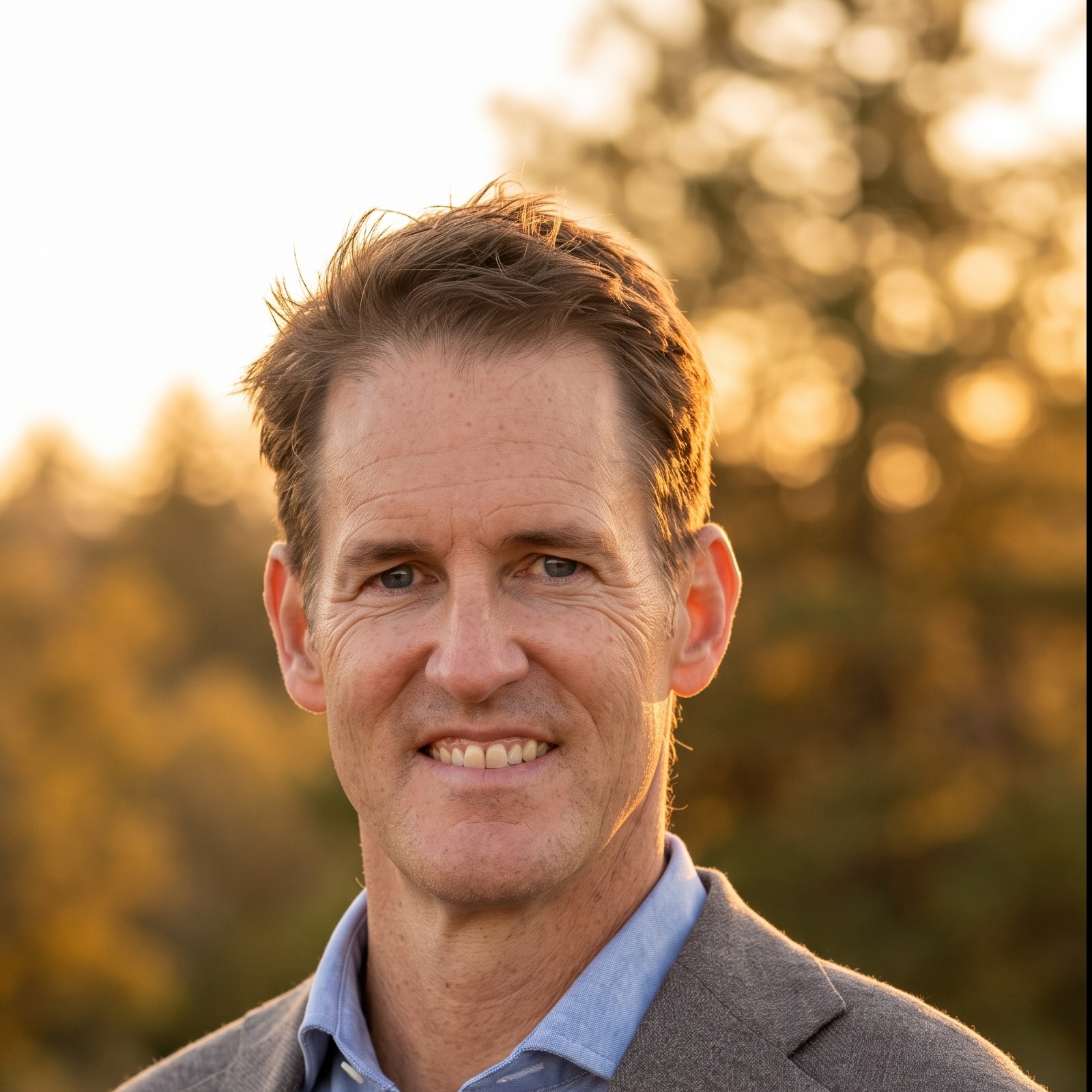
Dr. Rogers completed his residency in family medicine at Harbor-UCLA Medical Center in 2003. For the next 23 years he practiced at the Santa Barbara County public health clinics, where more than half his patients are Spanish-speaking. He teaches and supervises resident physicians. Now he is building not only this AI-engine medical practice centered on frontier therapies, but also One Tree Institute, a 501c3 non-profit dedicated to getting those therapies to his patients of low socioeconomic status.